Classroom Ready
Template Library
Practical, adaptable unit frameworks for social studies classrooms. Download-and-use tools with clear pedagogical instructions.
For the social butterflies in the audience!
Fake Social Media Templates
Many of these have been featured on the amazing Ditch That Textbook Website. Currently, these are only in Canva. Other formats forthcoming!
If your favorite website is missing, check out the library of a BILLION templates over at Ditch That Textbook.
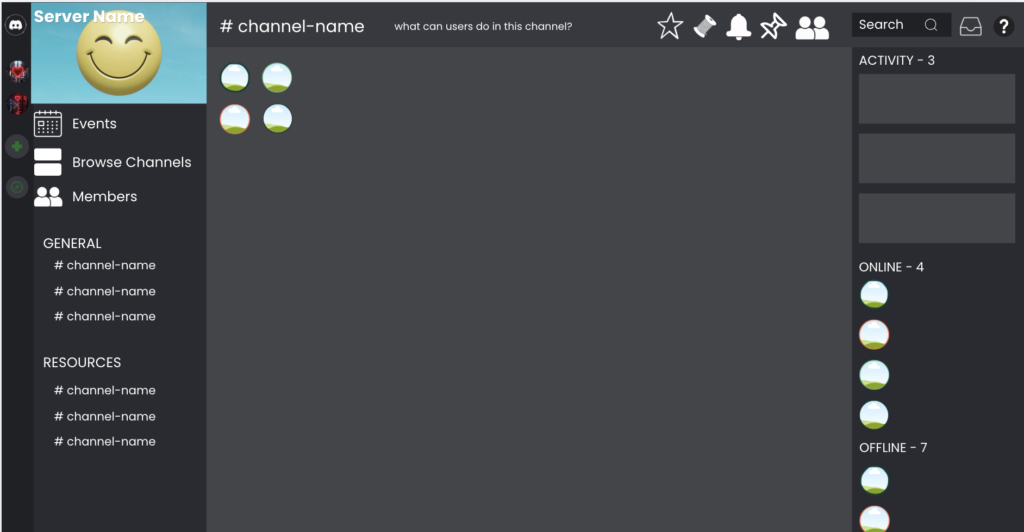
Discord has a reputation problem in schools. Admins hear it and immediately picture a 14-year-old screaming about Fortnite at 2 am. Fair. But structurally? A Discord server is one of the best discussion formats we have. Multiple threads, emoji reactions as low-stakes agreement signals, and the ability to reply specifically to one person without bulldozing the whole conversation. That’s just a Socratic seminar with better UX.
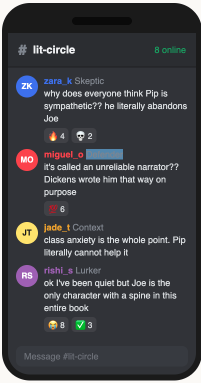
Discord has a reputation problem in schools. Admins hear it and immediately picture a 14-year-old screaming about Fortnite at 2 am. Fair. But structurally? A Discord server is one of the best discussion formats we have. Multiple threads, emoji reactions as low-stakes agreement signals, and the ability to reply specifically to one person without bulldozing the whole conversation. That’s just a Socratic seminar with better UX.
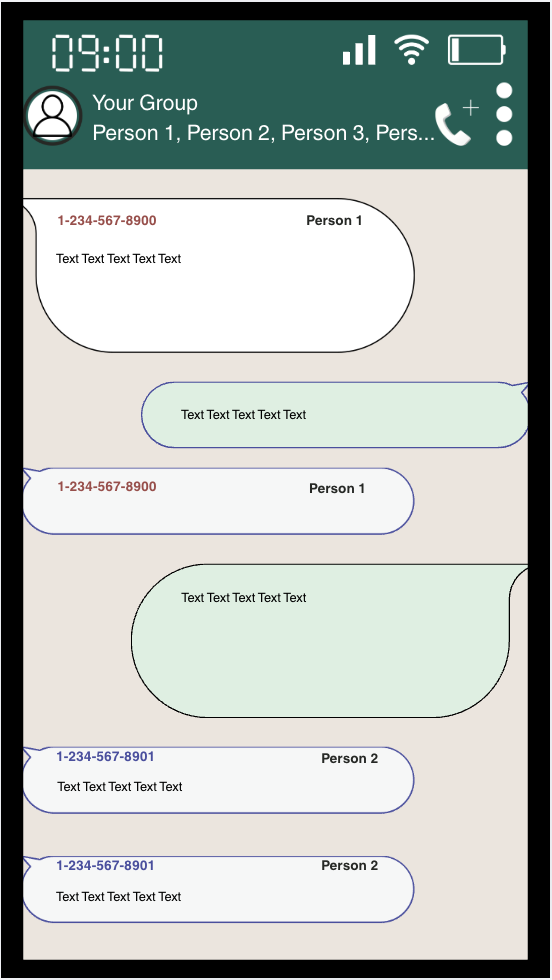
If Discord is the public square, WhatsApp is the hallway outside the classroom where the real conversation is already happening. Shorter messages. Tighter turns. Read receipts are doing the emotional labor. The three dots that mean someone is about to say something that is either very smart or very wrong.
This template works best when the constraint is the lesson.
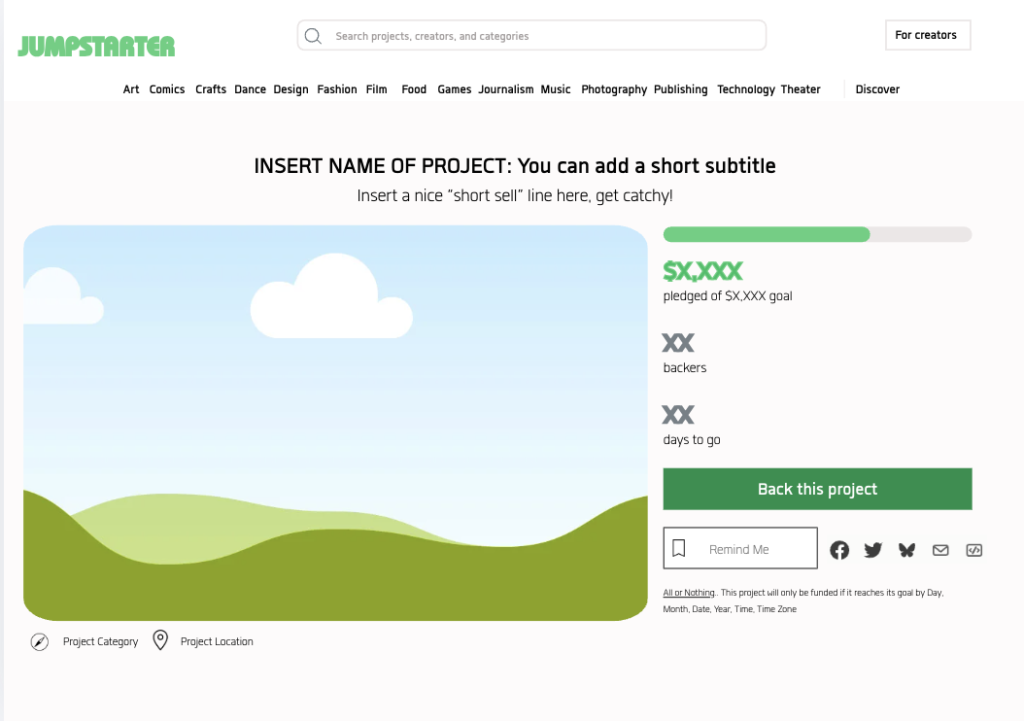
I love Kickstarter. I’ve got some pretty cool comics and other collectibles that may not have been found because they never hit traditional retail shelves. So, how can we catch this magic in the classroom? Kickstarter, or as we are calling it in the classroom, Jumpstarter, is a one-time crowdfunding campaign built around a specific project or idea. The campaign has a goal, a deadline, and most importantly, a tiered reward system. Backers get different things depending on how much they pledge.
That tiered reward structure is where the learning lives.
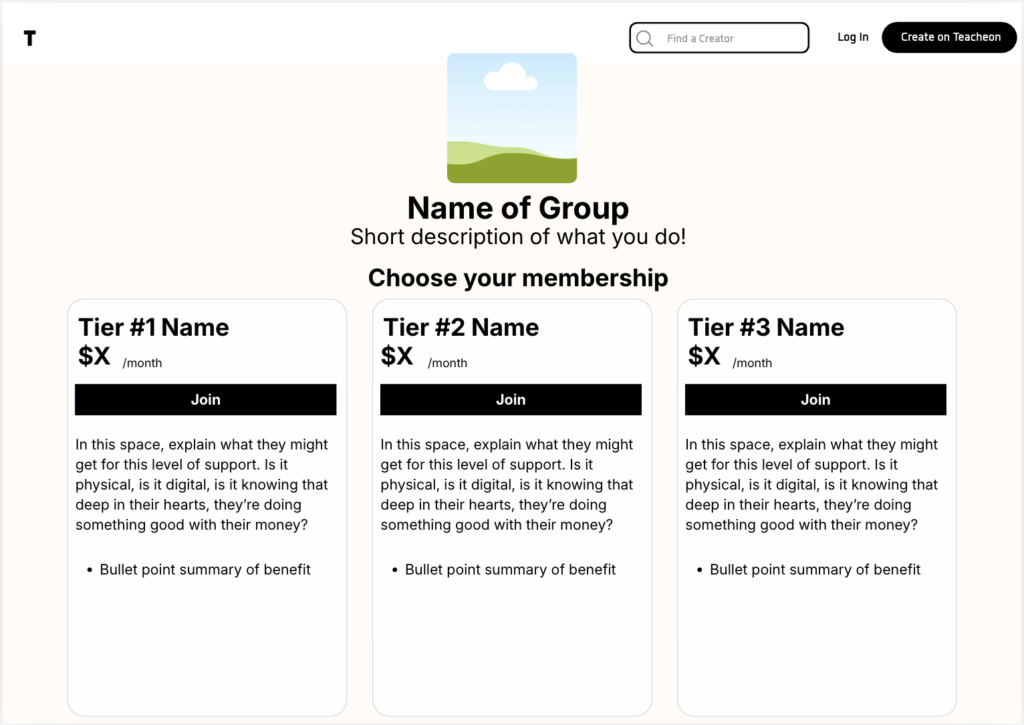
I also love Patreon. I have used it to support comic book artists I love (when I have the extra money), but I mostly support some of my favorite podcasts. If they are going to put in hard work to keep me entertained (especially D and D content!), I want to slide you a few extra bucks. So in the classroom, we can use Patreon, Teacheon in our version, to think about investments differently. Instead of a one-time campaign, it is an ongoing subscription model. Supporters pay a monthly amount in exchange for
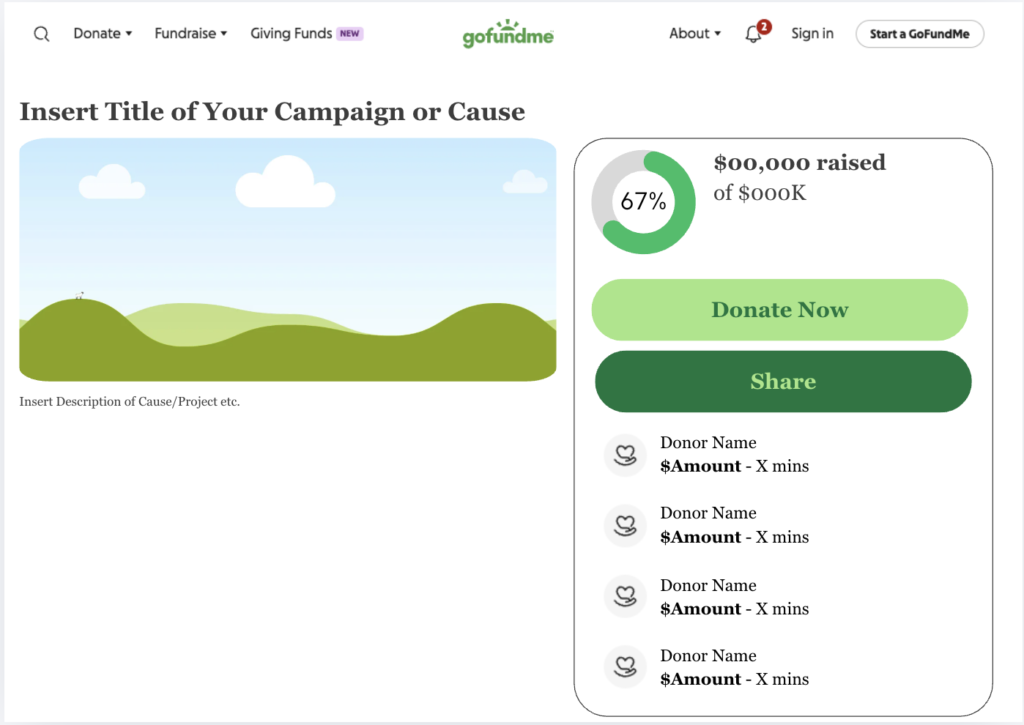
Here is why this suggestion hits differently. Most of the social media templates in either my collection or Matt’s Ditch That Textbook library (which is where this energy and inspiration came from) are platforms that students already use. Discord, dating sites, Instagram etc. These are websites and/or apps that students interact with frequently. They intuitively know the grammar of the format.
GoFundMe is different. Most of our students have not personally created a GoFundMe. But they have seen them. They have been tagged in them. They have watched them go viral. They understand, on a gut level, what makes one compelling and what makes one easy to scroll past. They know the difference between a campaign that makes you stop and one that doesn’t.
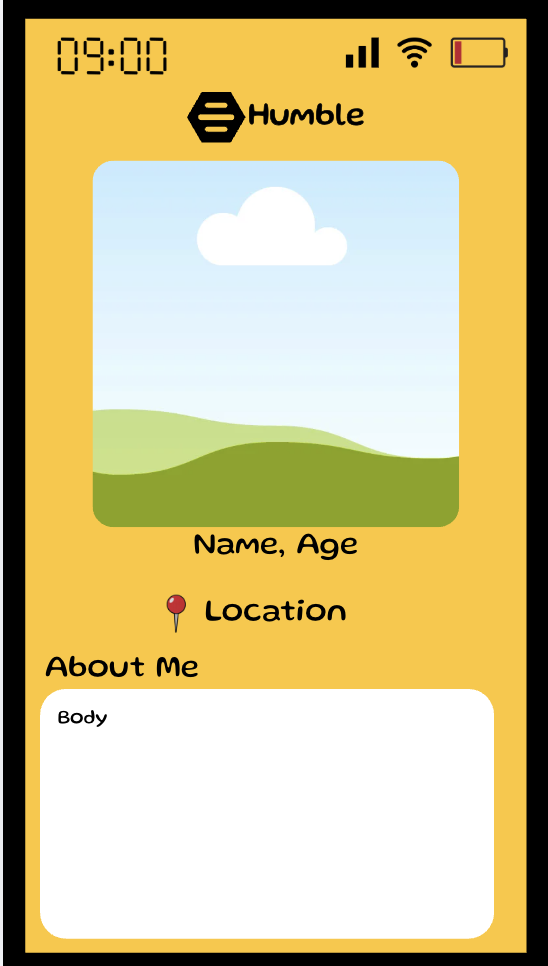
So, in teaching geography to 7th graders last year, I had to come at them sideways to get them to care about natural disasters. So I thought, major events—be they economic collapses, hurricanes, or world wars—do not happen in a vacuum; they require a specific “match” of circumstances to ignite. Dating Profiles for Disasters posits that every disaster has a “type.” By framing a catastrophe as a seeker of a partner, students are forced to identify the preconditions and catalysts that allow that event to thrive. This strategy strips away the “inevitability” of history and science, revealing that disasters are simply the result of a “perfect date” between volatile variables.
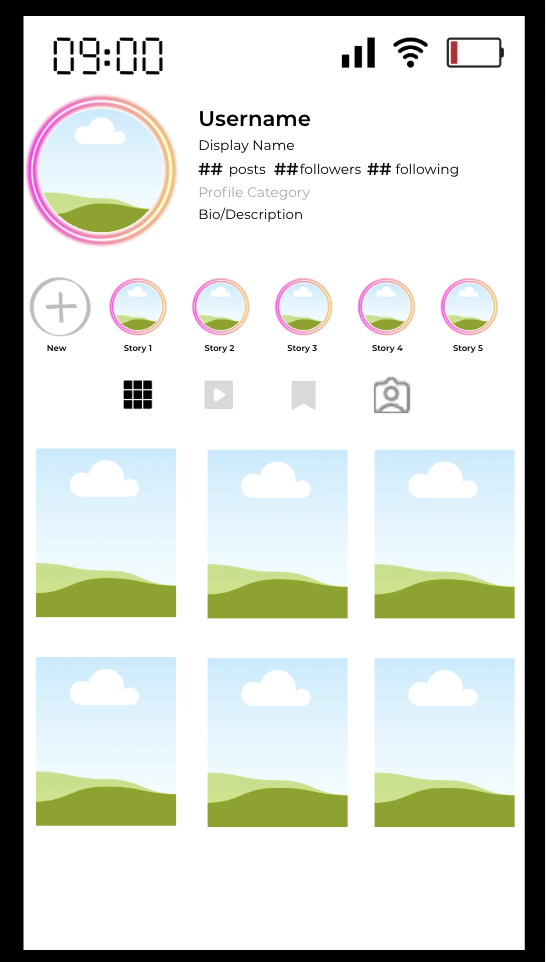
We live in a visual-first culture where “vibe” and “aesthetic” are shorthand for complex identities. The finstagram uses visual curation to represent the zeitgeist of a topic. This strategy posits that a student hasn’t truly understood a concept until they can “brand” it. By selecting nine images and captions that represent a theme, students are performing a “triage of significance.” They are deciding what is “post-worthy” and what is “behind-the-scenes,” forcing them to prioritize the most iconic and influential aspects of a unit.
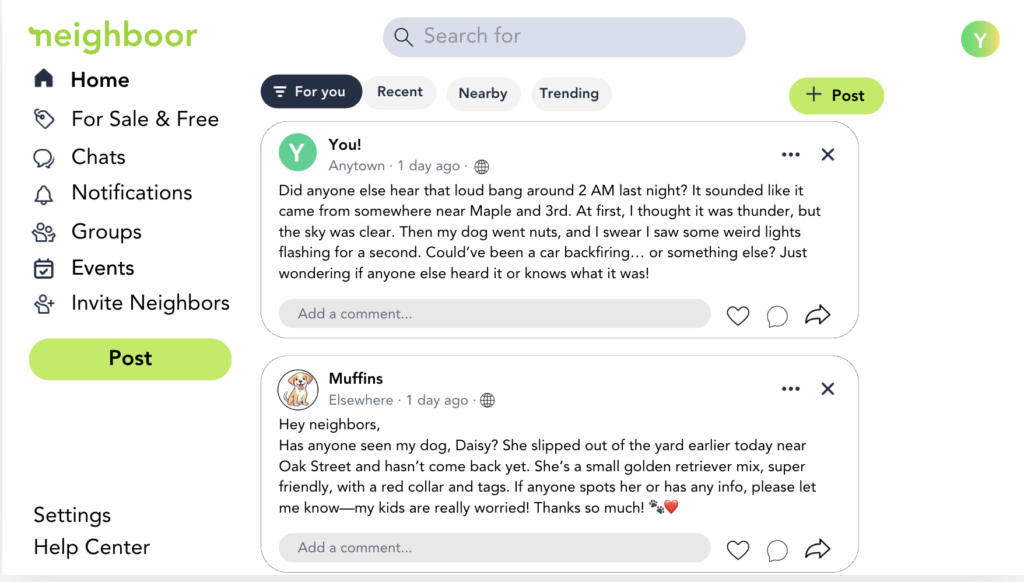
This activity targets contextual surveillance. Students must identify the “disturbances” in a system. To write a convincing Neighboor post, they have to recognize what is “normal” for that environment and what constitutes a “threat” (e.g., an invasive species, a new tax, or a shifting tectonic plate). This requires them to weigh the “stability” of a system against the “interlopers” trying to disrupt it.
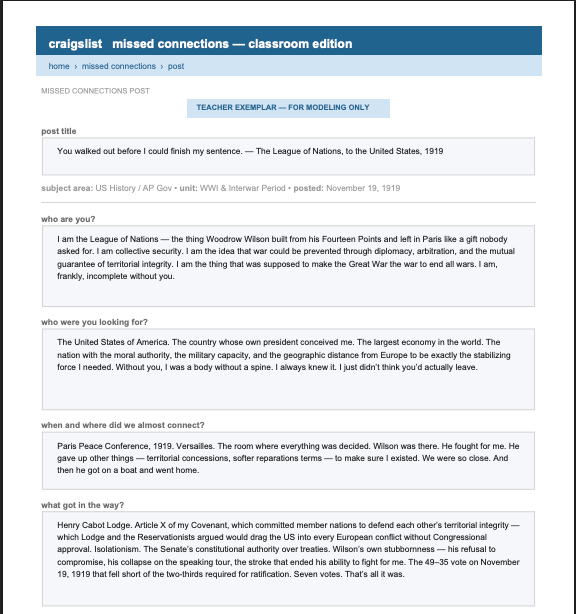
The Craigslist Missed Connections format does something a traditional prompt cannot: it gives students a voice, a perspective, and a dramatic stake in the outcome. They are not writing about the missed connection from the outside. They are writing as one of the subjects, the historical force, the literary character, the scientific concept, looking back at the moment of near-intersection with longing, regret, or frustration.
Don’t Mess With The Classics
Project Zero (and other visible) Thinking Routines
Enjoy a variety of templates designed to complement some of my favorite visible-thinking routines. Most of them are inspired by Project Zero from the Harvard Graduate School of Education, but other sources of inspiration will arrive from time to time! For more, check out my Wednesday posts dedicated to how these routines are used in my classes!
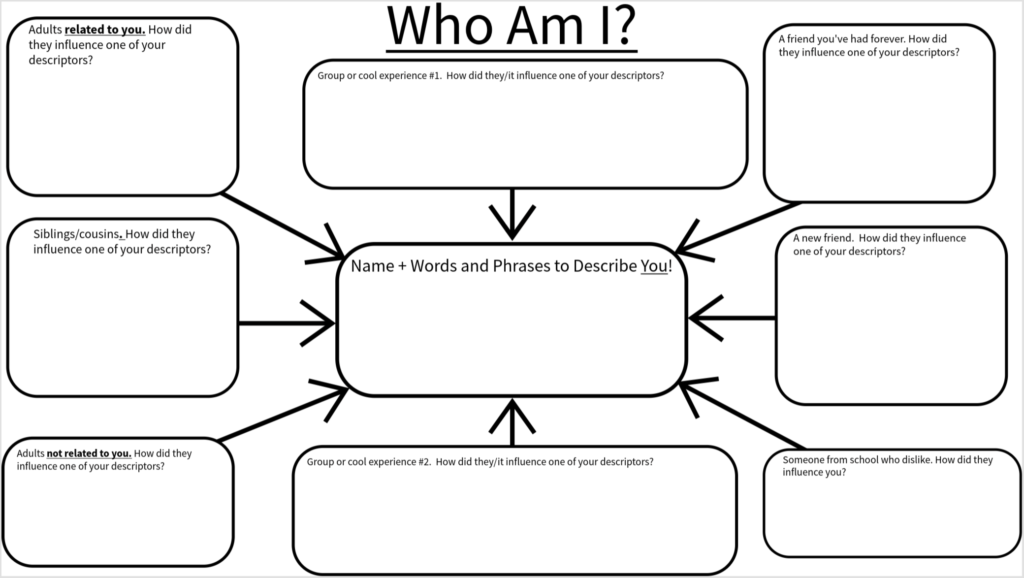
Who Am I? is a Project Zero thinking routine that asks students to think about identity, specifically, the identity of a concept, object, historical figure, organism, or literally anything you are studying.
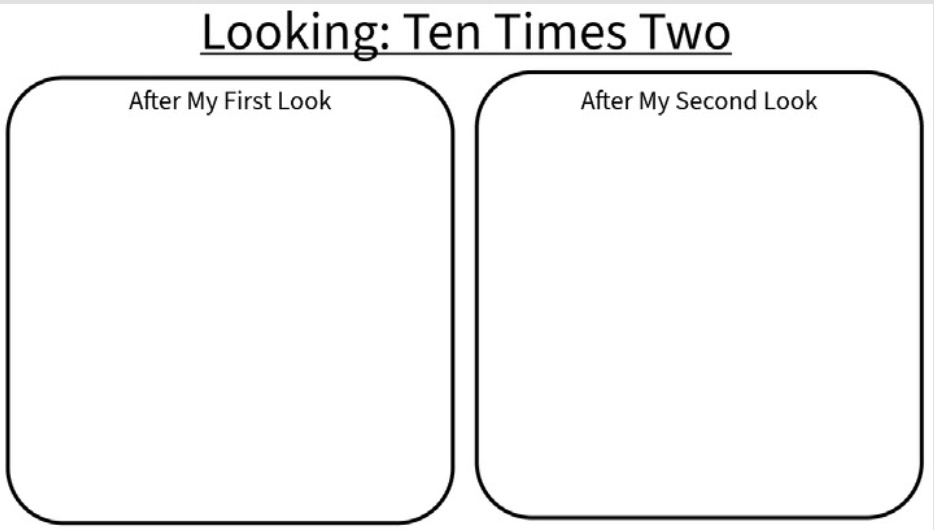
Students look at a piece of art, an image, a graph, a diagram… anything visual…for an extended period of time. Specifically, they look at it for 30 seconds, and afterwards they write down 10 words, phrases, facts, or questions.
Hence: Looking: Ten Times Two.
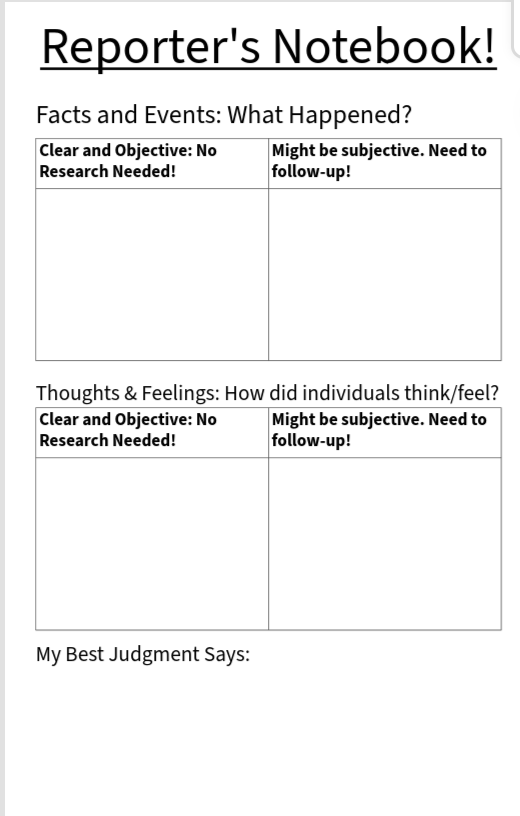
Reporter’s Notebook is a thinking routine that asks students to approach any piece of content: a text, a video, an experiment, a primary source, like an investigative journalist trying to crack a story.
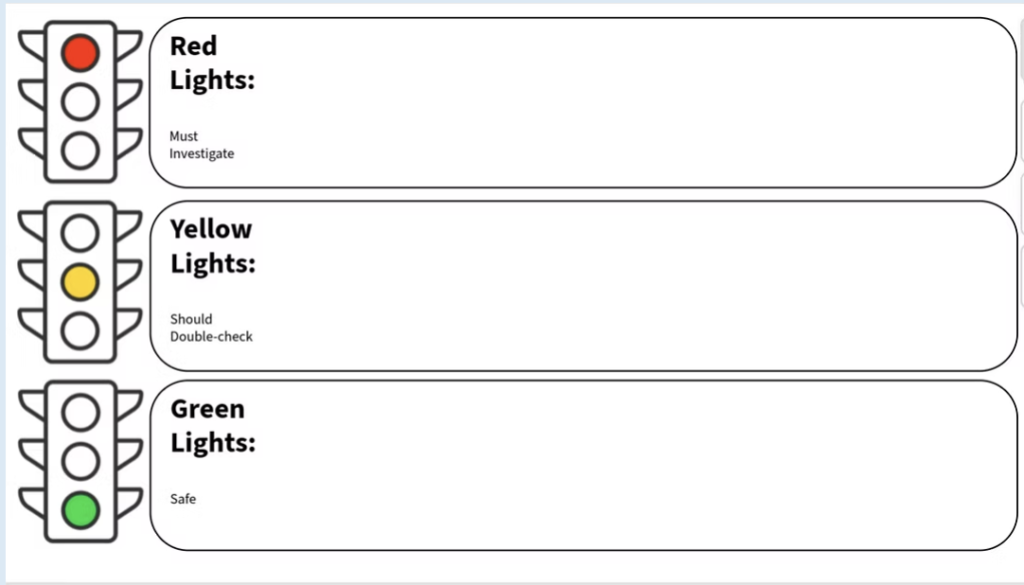
Red Light, Yellow Light is a thinking routine that asks students to evaluate claims or ideas the same way a driver approaches a stoplight.
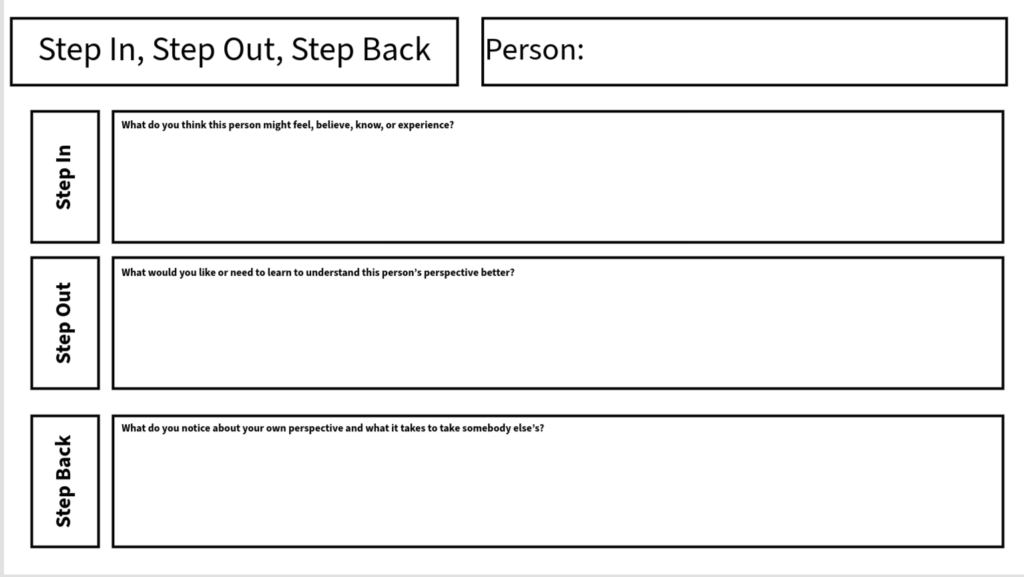
Step In, Step Out, Step Back is the thinking routine I wish someone had handed me at 14. Because it does what competitive debate does at its best: it forces you out of your own head and into someone else’s and then makes you zoom out far enough to see the whole picture.
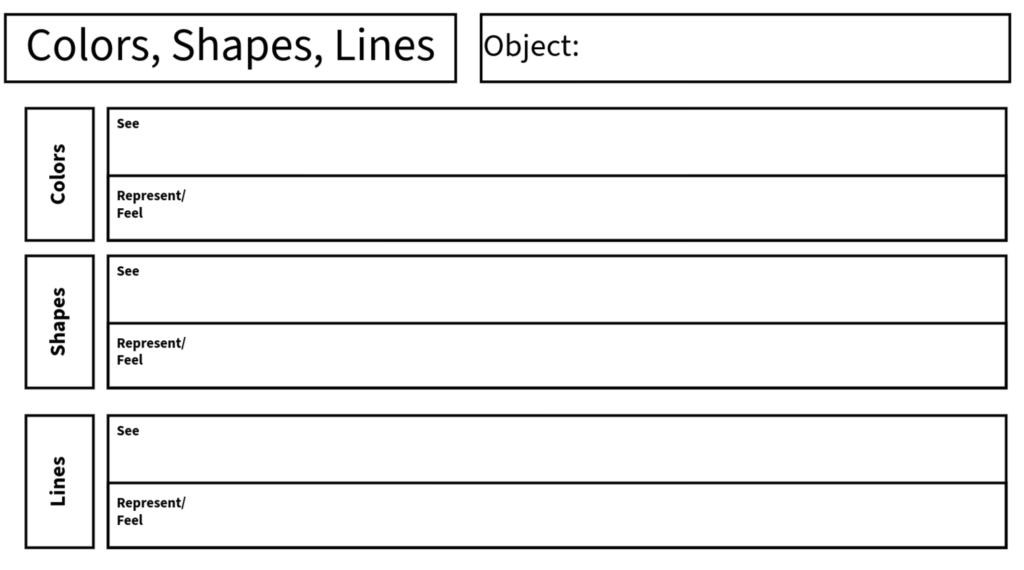
While I enjoy using Colors, Shapes, Lines in its traditional form, to get students to analyze works of art, etc., I have found myself leaning into using this Project Zero thinking routine to help add an abstract dimension to analyzing almost anything. It is the perfect way to get strategically weird with your students! The template works for either application!
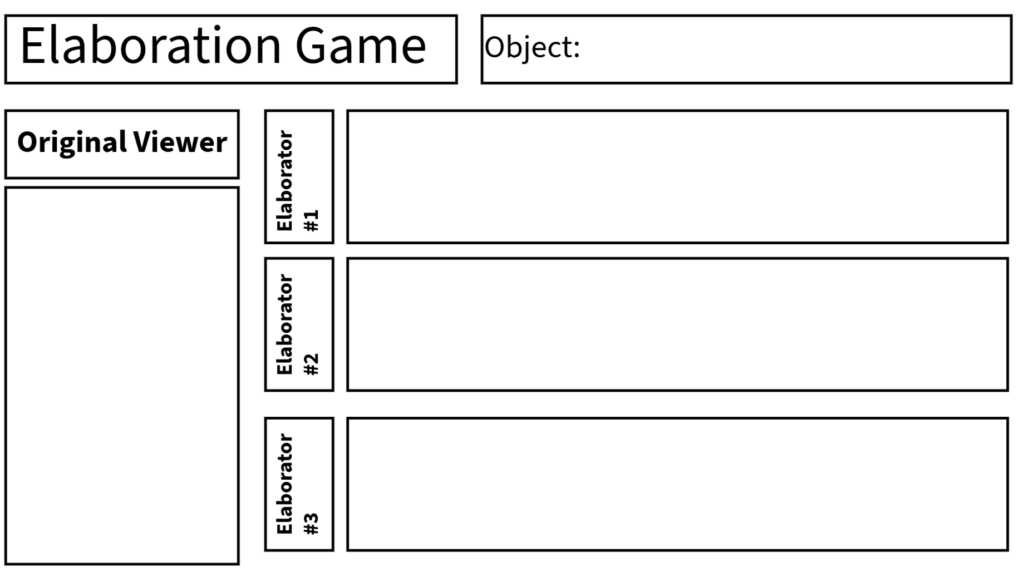
You are only allowed to say what you see. Not what you think. Not what you feel. Not what it means. Only what is literally, observably there.
That constraint is the entire engine of the Elaboration Game, and it is, I would argue, one of the most quietly radical things you can ask a student to do in a classroom that has spent years rewarding interpretation over observation.
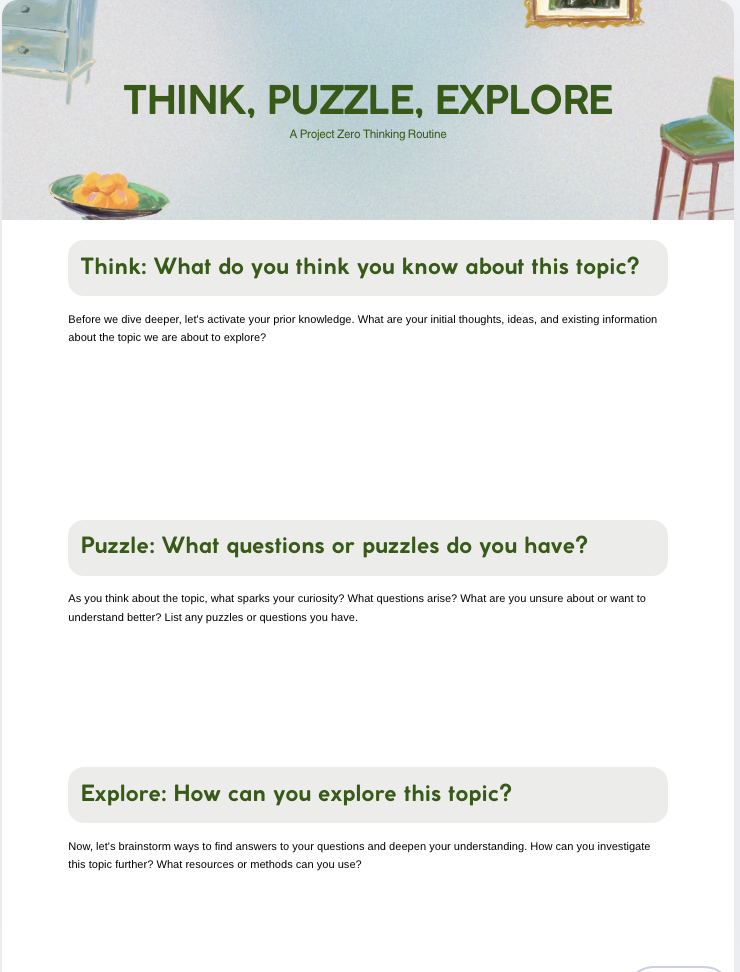
Think, Puzzle, Explore is, in my opinion, one of the most elegantly designed entry routines in the whole library. Three prompts, used at the beginning of a new topic, concept, or theme:
What do you think you know about this topic?
What questions or puzzles do you have?
How might you explore this?
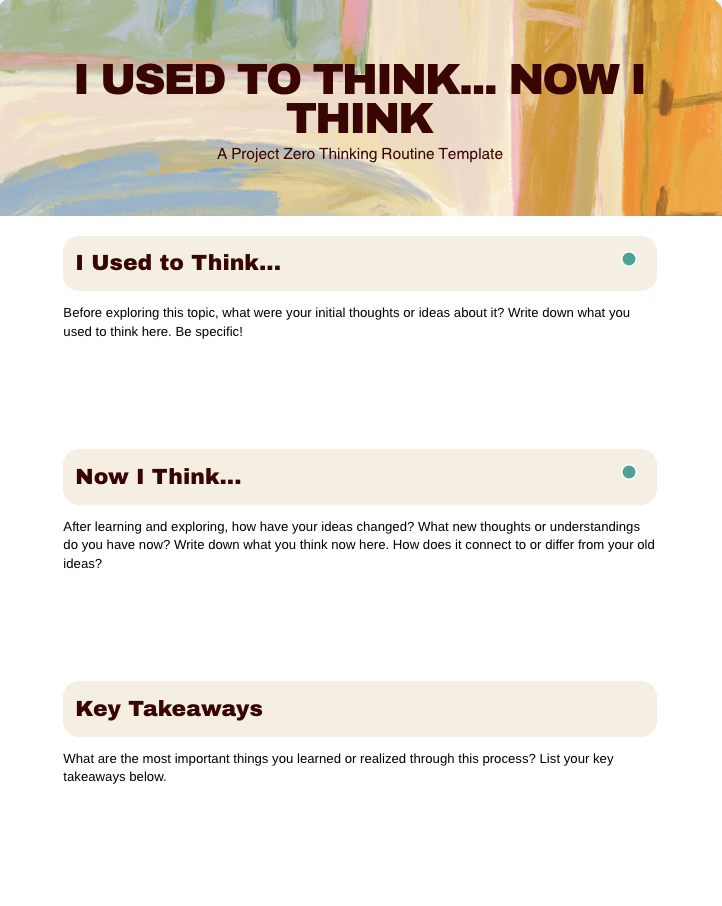
I Used to Think… Now I Think… is one of the most deceptively simple routines in the Project Zero library. Two sentence stems. That’s the whole thing.
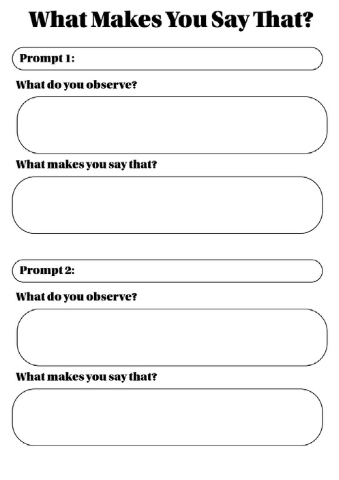
Best for: Backing up claims and building an evidence-based culture.
This is the ultimate “show your work” routine, but without sounding confrontational. It asks people to naturally link their opinions to evidence.
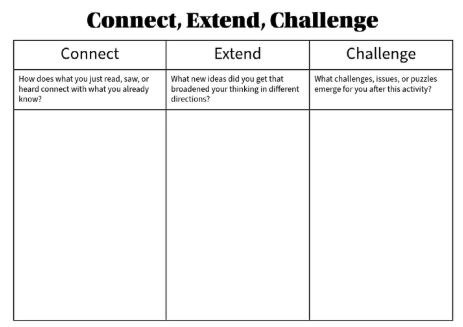
Best for: Processing a new article, video, book, or lecture.
When we learn something new, we have to hook it onto something we already know. This routine makes that process happen on purpose.
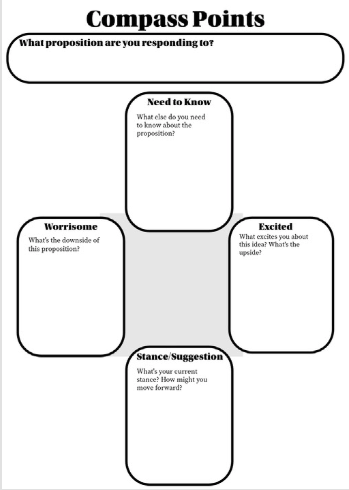
Best for: Evaluating a new proposal, idea, or upcoming change.
Using the points of a compass, this routine helps a group look at a new idea from all angles before making a decision. It’s a lifesaver for team meetings!
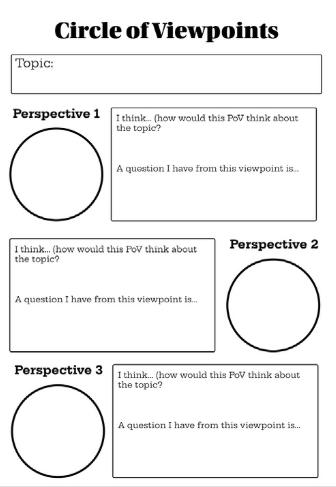
Best for: Backing up claims and building an evidence-based culture.
This is the ultimate “show your work” routine, but without sounding confrontational. It asks people to naturally link their opinions to evidence.
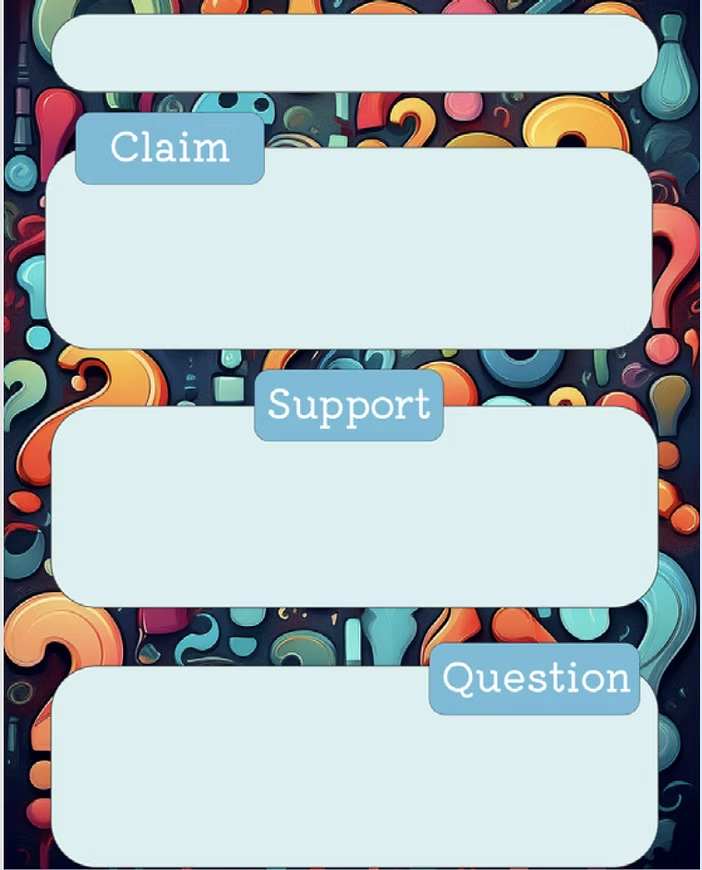
Claim, Support, Question is a Project Zero thinking routine built around exactly this gap. The structure is what it sounds like: a student makes a claim about whatever they’re studying (an interpretation, an explanation, a belief), identifies support for that claim (evidence, reasoning, examples, things they can point to), and then asks a question, something that isn’t explained by the claim, a gap in the evidence, something a reasonable person might push back on.
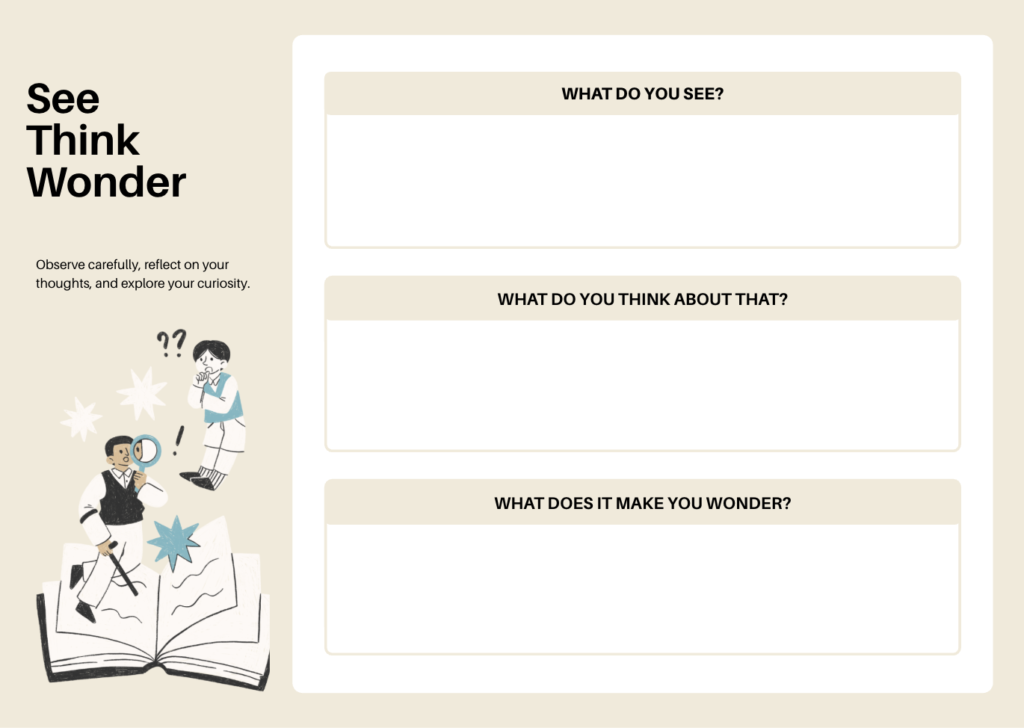
As the Talking Heads once said, “And you may ask yourself,” don’t we have our students make observations all the time? “And I may say to myself,” most of the time, we are not actually seeing. We are pattern-matching. We glance at something, our brain helpfully fills in what it thinks is going on, and we are already two steps into interpretation before we’ve even really looked. Everything is just the “same as it ever was” without time to stop and smell the roses.
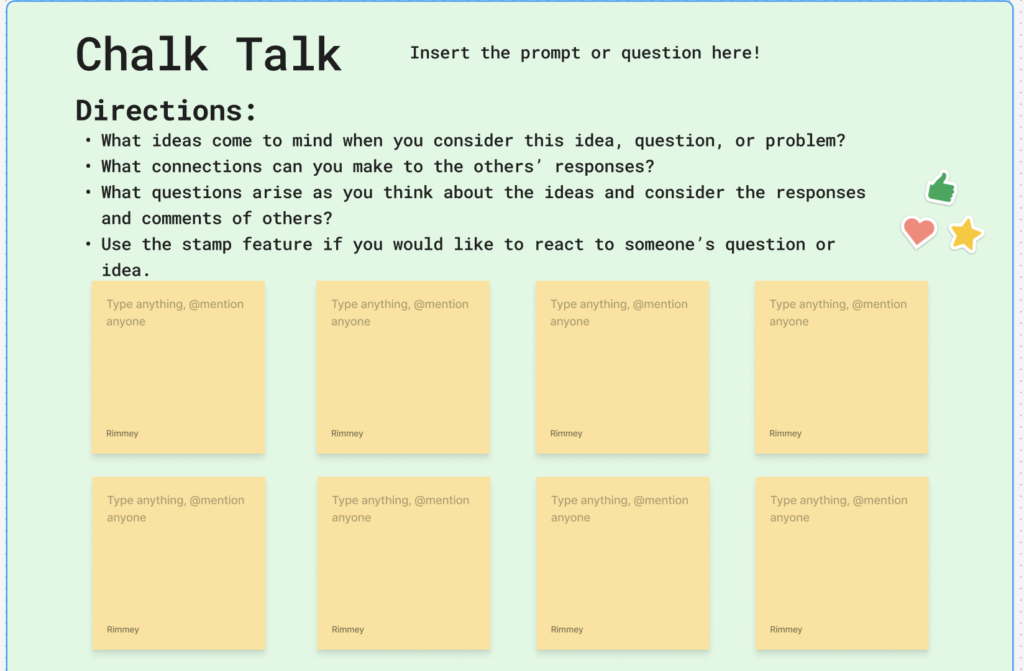
Chalk Talk is one of those routines that works beautifully in multiple environments, and the right choice depends on your classroom. The traditional version — big paper, markers, students physically moving around the room — has a magic to it that’s hard to replicate digitally.
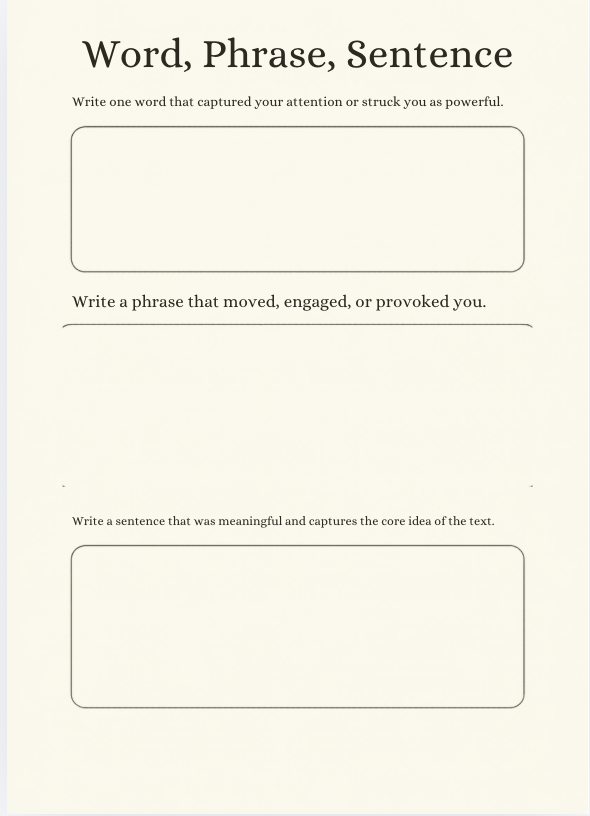
Word, Phrase, Sentence fixes this. The routine is exactly what it sounds like. After reading a text, students identify:
A word that captured their attention — that struck them as powerful, surprising, or worth sitting with.
A phrase that moved, engaged, or provoked them in some way.
A sentence that felt meaningful — one that they believe captures something core about the text.
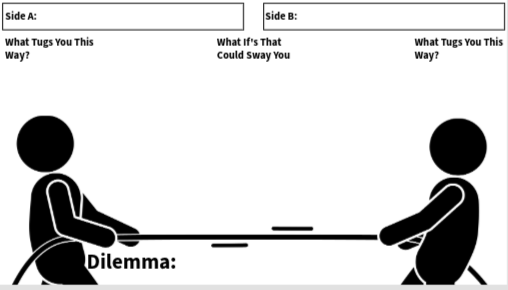
The routine is built around a fairness dilemma: a situation that looks like it has a right answer but actually has legitimate forces pulling in both directions. The visual metaphor is the whole game: students are looking at a rope, and they’re placing reasons on either side of it based on which direction those reasons pull. Not which side they personally agree with. Which direction the reason actually tugs.
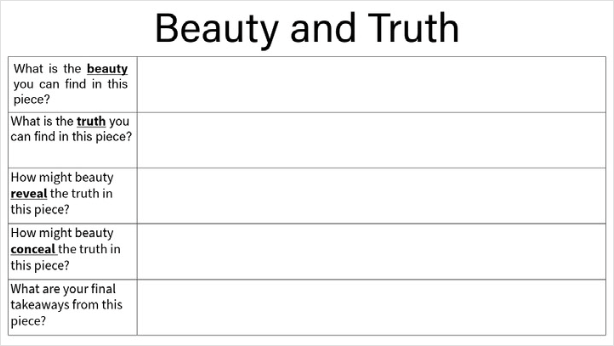
Here is the question the Beauty and Truth routine asks students to sit with: How might beauty reveal truth and how might beauty conceal it?
That is not a comfortable question. It is also one of the most important questions anyone can learn to a
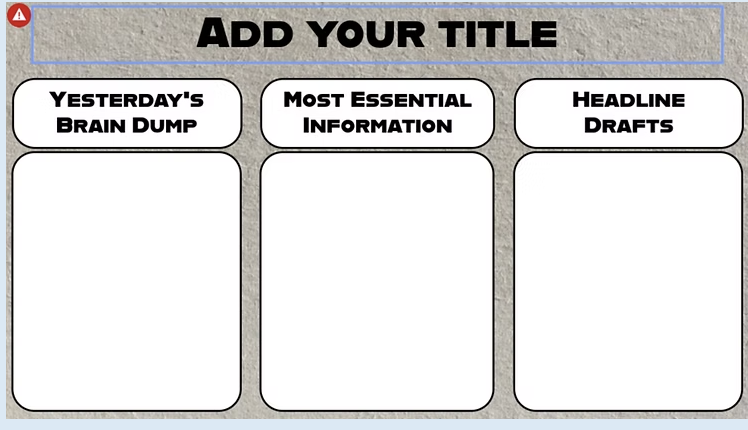
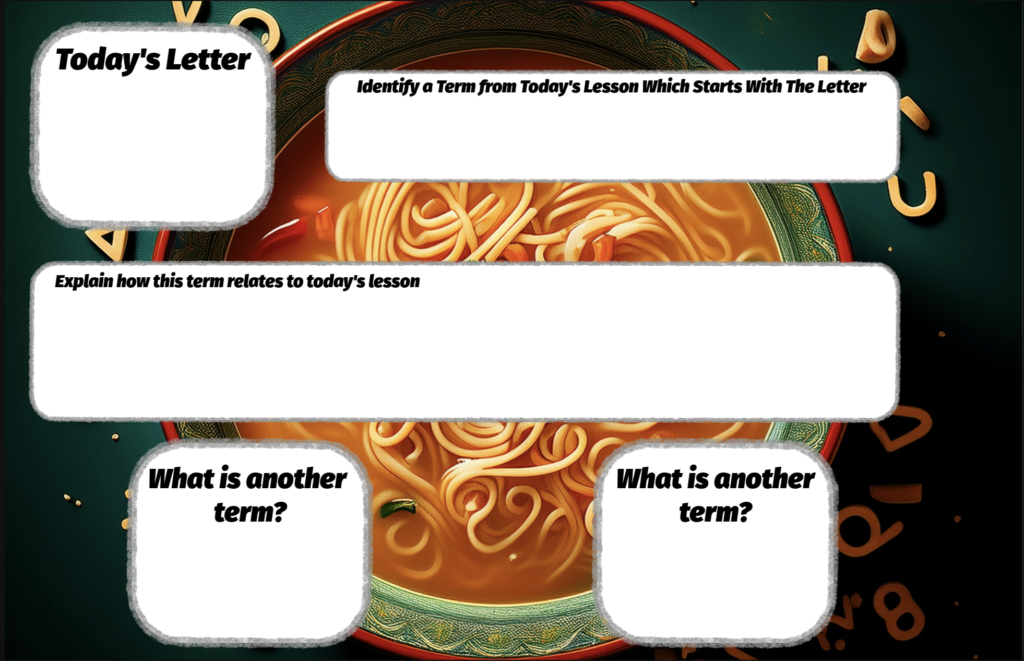
The first is a bellringer activity over the previous day’s lesson. You give them the topic area, and then in three steps, they build their headline. You have them brain dump what they remember. Distill it down. Draft it, and then share their final product. Using these “baby steps” to process their thinking helps create better headlines because it slowly reactivates their knowledge and separates the wheat from the chaff.
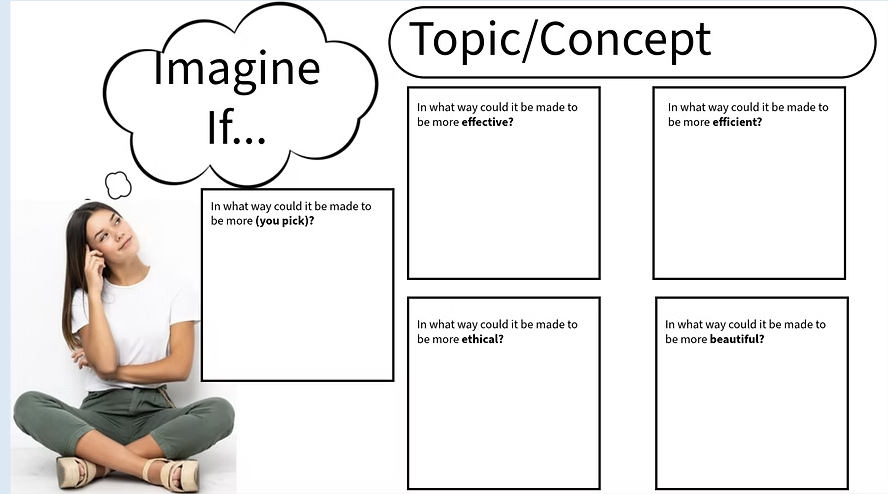
Imagine If is a Project Zero thinking routine built entirely on curiosity. The structure is exactly what it sounds like: students take something they’ve been studying and ask, “What if one key thing were different?” What would change? What would stay the same? What new problems would emerge? What would be better? What would be worse?
Dp you want to play a game?
Games and Other Weird Activities
If you’ve read any the blog posts, or met Rimmey in person…you know he’s a bit….eccentric? He has a penchant for weird activities and getting students to do odd things to learn. So, if you want a deep dive into the chaos gremlins that pilot Rimmey’s body, check these out!
The concept is simple: give a concept a voice, a vibe, and a grievance — then put it in the hot seat.
One student plays the journalist. One student plays the object, concept, law, or historical document. (Or you act as the journalist, and all of your students act as the subject.) The journalist asks three hard-hitting questions. The object answers in character and in doing so, must demonstrate a deep understanding of its own function, limitations, and relationship to the rest of the curriculum.
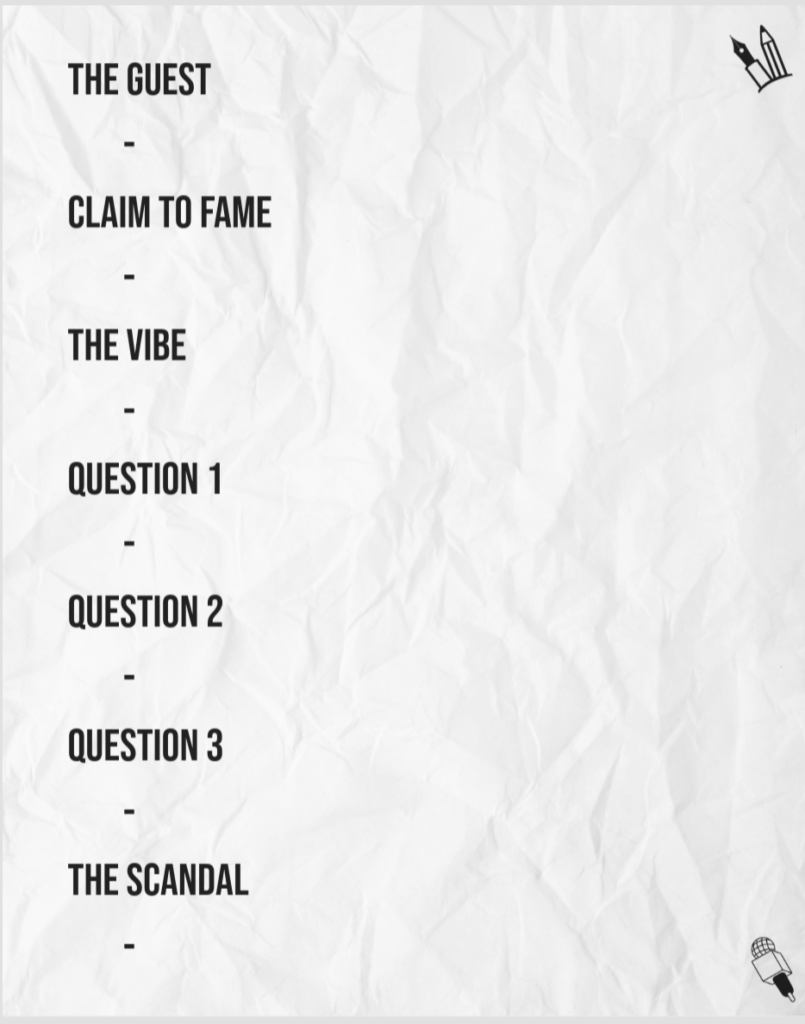
The concept is simple: give a concept a voice, a vibe, and a grievance — then put it in the hot seat.
One student plays the journalist. One student plays the object, concept, law, or historical document. (Or you act as the journalist, and all of your students act as the subject.) The journalist asks three hard-hitting questions. The object answers in character and in doing so, must demonstrate a deep understanding of its own function, limitations, and relationship to the rest of the curriculum.
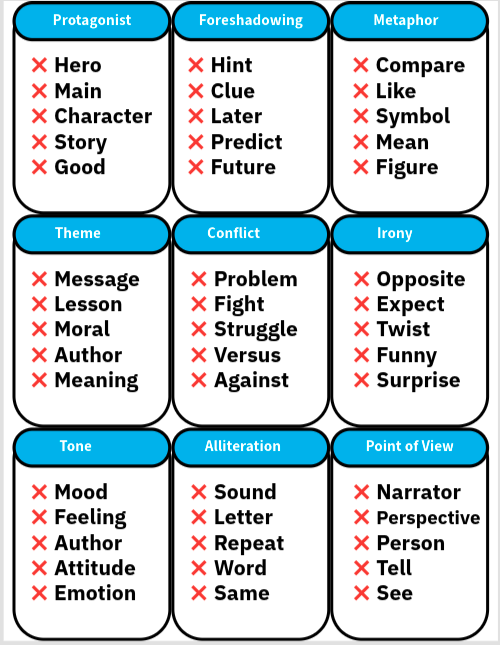
In the Taboo Lecture, we’re banning the obvious terms. You have to explain the heart without saying ‘pump,’ ‘blood,’ or ‘muscle.’ This forces the brain to stop taking the path of least resistance and actually explain the mechanism of the universe.
Jargon may be important in a conversation with peers within a discipline. However, for the outsider, it is a shortcut that can lead to intellectual laziness. This strategy showcases that true mastery is the ability to explain the world to someone who doesn’t speak your professional language.
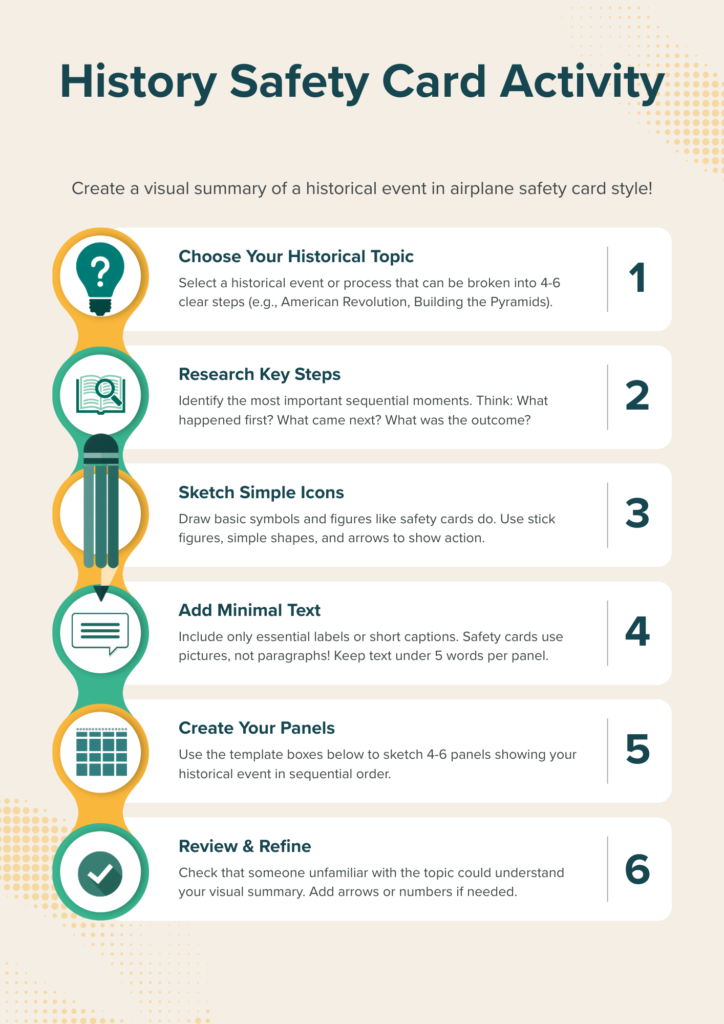
Welcome to the Flight Safety Card activity. Population: every subject area, every grade level, every unit you have ever taught.
You may be thinking to yourself: Surely, he can’t be serious…..
…I am serious, and don’t call me Shirley!
Never Miss a New Template
Subscribe to our newsletter for weekly releases of new frameworks, tools, and pedagogical insights.